
Why Data Analytics in Audit Improves Audit Quality

When discussing audit technology, many people talk about generative AI. However, the performance of data analytics in audit continues to be impressive. It helps companies to perform more effective audits and concentrate on actual risks.
The Way Data Analytics in Audit Enhance Quality
Regulators would now like firms to use audit data analytics more extensively. They also seek greater innovation throughout the profession. Audit quality has been improving steadily and this progress is being maintained with the help of analytics.
Regulators are now keeping a close eye on the use of technology, particularly outside the largest businesses. New tools are typically used by larger companies first. The way a firm uses technology is another important aspect in determining how regulators assess the quality management system of a firm.
Data Analytics and AI Play Different Roles
AI and Analytics are serving different purposes during an audit. There is a bit of confusion about where the two intersect. With the spotlight usually fixed on Generative AI, analytics is often overlooked. However, data analytics in audit plays a significant role.
Analytics platforms assist with risk assessment and testing, including revenue and journal testing. They can also help with planning, staff allocation, resource handling and audit file management. Auditors can access and study vast amounts of data and AI tools can complement this effectively. The outcome is dependable and actionable insight in real time.
Testing Full Populations Rather Than Samples
Data analytics in audit enables auditors to move beyond small samples. Some tools can now review all records in a client’s financial data. They are also able to review the data more frequently during the year, rather than just once at a specific time.
Investing in Specialists
Companies are hiring technology and analytics experts for quality enhancement. The best audits involved specialists from an early stage and throughout, when their assistance was required. They also had independent evaluators, robust leadership, effective project handling and strong challenge of management.
Challenging Management Estimates
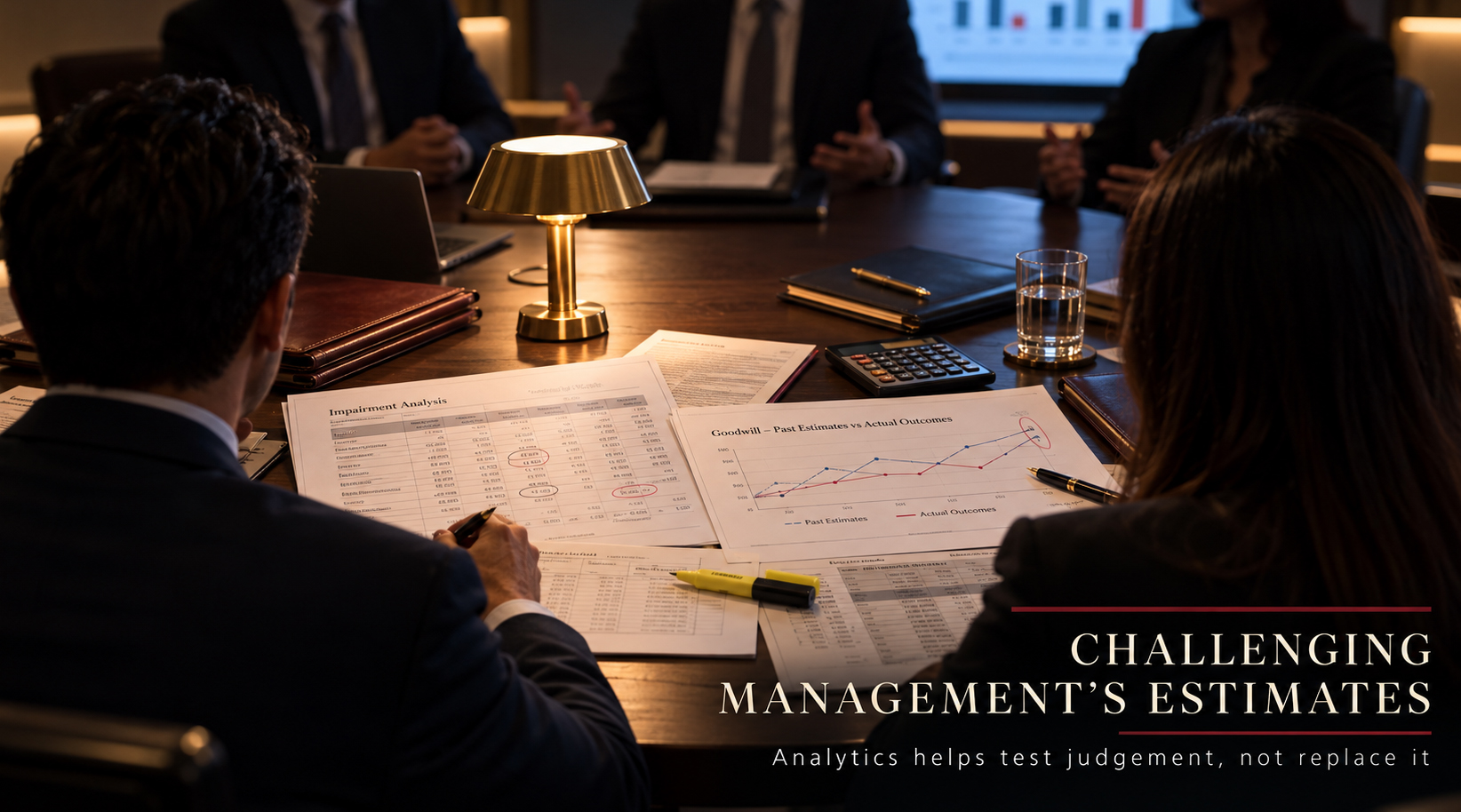
Auditing standards on accounting estimates require auditors to question management’s judgements. There are three ways analytics platforms can help. They review the calculation of estimates, assist auditors in the development of their own estimates and provide assistance in challenging management’s views.
Auditors are also able to review previous accounts to identify bias in impairment calculations. This will enhance examination of bias and subjective judgements in impairment assessments, calculations of goodwill and provisions for bad debts.
Improved Planning and Project Handling
Analytics can be used in a company’s workflows and admin tasks. This assists them in meeting deadlines and ensuring timely delivery. Platforms can handle vast amounts of documents securely and organize them as well as monitor changes over time.
It can also allow them to measure their own workflow against optimal targets. Text and graphical representations then reveal areas where delays occur.
Challenges in Adopting Data Analytics in Audit
The skill of data analytics is still essential for auditors. Regulators have confidence in auditors to exercise professional judgement during its application. Still, barriers remain. These involve data quality and consistency, alignment with the firm’s audit approach, regulatory questions about the effective use of analytics and skill gaps.
Auditors are not required to become data scientists. They should be familiar with how, why and when to use analytics. They will also need to learn how to set up tools and interpret their findings.
Conclusion
Data analytics in audit provides the firms with a more accurate risk focus, broader testing and improved project control. Audit quality can be improved throughout the profession with the relevant skills and assistance.
- Phone
- +971 56 524 0583
- [email protected]
- Office
- Office 217, Business Village, Block B, Al Maktoum, Deira, Dubai
- Hours
- Monday to Saturday, 9:00 to 18:00