
Oman GDP Growth Expected to Reach 3.5 Per Cent in 2026
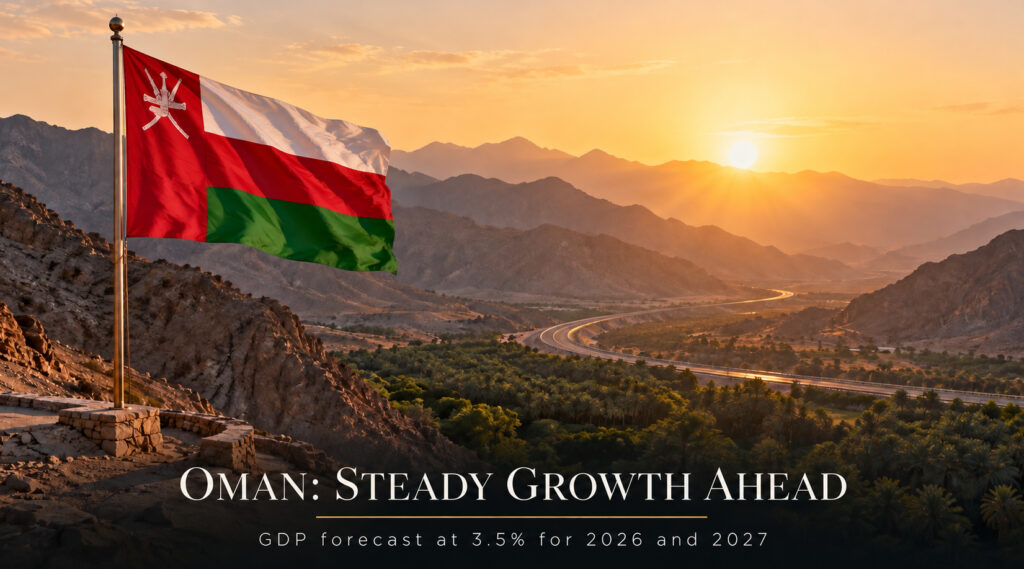
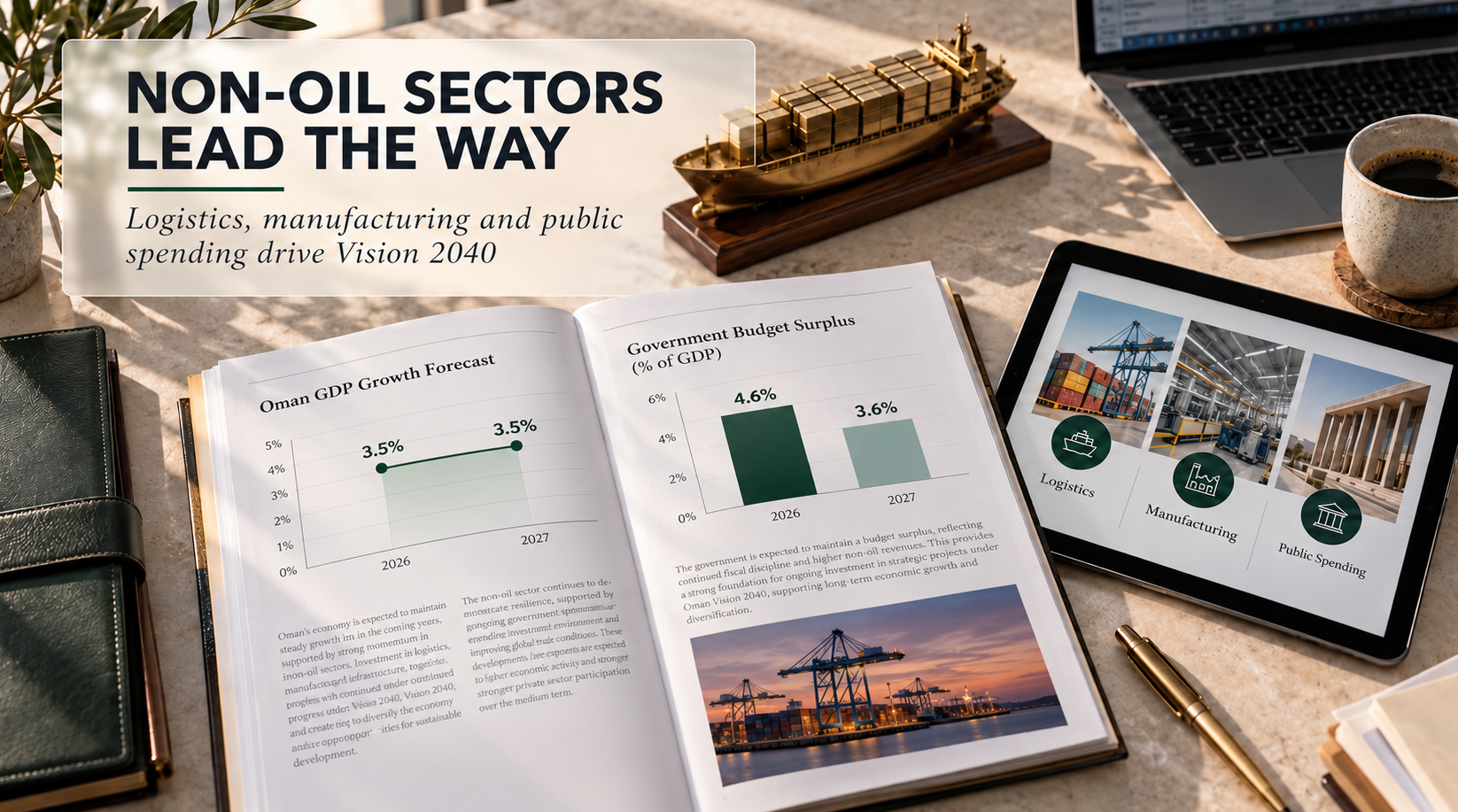
Oman’s economy is expected to achieve steady growth. Standard Chartered expects Oman’s GDP to reach 3.5 per cent in both 2026 and 2027. This growth will stem from solid activity in the non-oil sectors, along with a positive contribution from the oil and gas industry.
Non-Oil Sectors Driving Growth
The bank believes non-oil growth will stay strong. This is driven by a number of key sectors such as logistics, manufacturing and public spending. A large proportion of this spending is related to Oman Vision 2040, the nation’s long-term development strategy.
Government Finances Show Major Improvement
Standard Chartered has increased its projections for Oman’s government finances by a substantial margin. The bank now expects that there will be a budget surplus of 4.6 per cent of GDP in 2026. For 2027, it expects a surplus of 3.6 per cent. These figures are significantly higher than previous estimates of only 0.5 per cent and 1 per cent, respectively.
Government debt is also expected to decline. By the end of 2026, it is predicted to fall to approximately 33 per cent of GDP. The debt should drop further to approximately 31 per cent by the end of 2027.
The bank also upgraded its forecast for Oman’s current account. It now expects a surplus of 5 per cent of GDP in 2026 and 3.4 per cent in 2027. These figures are significantly higher than the previous estimates of 1 per cent and 1.5 per cent.
Hussain Al Yafai, Head of Coverage and CEO of Standard Chartered Oman, said that the country has made progress in its expansion and is now in a stronger position for the next phase. Oman’s foundation to attract investment is robust and is supported by its stable non-oil growth as well as positive fiscal and external indicators, he said. The true opportunity now is to leverage this strength to advance the country’s Vision 2040 goals and attain broader and lasting growth, he added.
Shifting Trade Routes Could Help Oman
Standard Chartered also highlighted a new opportunity for Oman. Businesses are searching for secure and more dependable trade routes as global supply chains evolve.
According to the bank, Oman’s location and its neutral position in the region as well as its lower risk of disruptions caused by conflict, make its industrial zones and ports more important. As a result, its logistics network is becoming more significant on the global stage.
Investments across logistics, manufacturing, re-export trade and energy infrastructure are expected to increase. This is happening as companies are reassessing their regional supply chains.
Oman remains strong in terms of connection and stability, as firms assess their trade routes, said Al Yafai. He added that the country has well-established ports and industrial zones, providing it with a solid foundation for attracting more trade and investment. This, he added, can facilitate the development of the country’s non-oil sector, which, in the long run, can help to make Oman more engaging for investors.
A Stronger Path Forward
Standard Chartered concluded that Oman’s stronger economic foundation alongside its prime location places the country in a favourable position. This combination can help maintain stable non-oil growth while helping Oman to take advantage of evolving global trade trends.
- Phone
- +971 56 524 0583
- [email protected]
- Office
- Office 217, Business Village, Block B, Al Maktoum, Deira, Dubai
- Hours
- Monday to Saturday, 9:00 to 18:00