
IAS 21 Amendment Explained: Translating into a Hyperinflationary Currency

The IAS 21 amendment addresses a gap in the way companies handle hyperinflationary currencies. It impacts entities that convert their financial statements to such a currency. This article describes the context, the current rules and the upcoming changes in simple terms.
Hyperinflation Accounting Explained
IAS 29 applies to financial reporting in economies with extremely high inflation. It is applicable to any business that has a functional currency belonging to such an economy. The standard’s paragraph 3 specifies a number of indicators that may suggest hyperinflation.
A global accounting network used the IMF World Economic Outlook to identify 9 hyperinflationary countries, as of June 2026. These countries are Argentina, Haiti, Iran, Lebanon, Malawi, South Sudan, Sudan, Türkiye and Venezuela.
Trading With Hyperinflationary Economies
There are numerous businesses that conduct trade with companies in these countries. For those deals, they follow the guidelines of IAS 21, which deals with changes in foreign exchange rates.
Items are initially translated at the historical rate on the date of the transaction. They are retranslated upon settlement of the item. Any gain or loss is recognized in profit or loss.
Monetary items are retranslated for unsettled items, while non-monetary items are not. Gains or losses on translation typically go to profit or loss. The exception is applicable when fair value gains or losses on those items are recognized in other comprehensive income.
Basic Principles Under IAS 29
Financial statements should be shown in the current measuring unit at the reporting date. This is applicable whether they adopt historical cost accounting or current cost accounting.
All amounts, including comparatives, must be stated in that unit. Non-monetary items in the balance sheet are restated using a general price index unless they are already expressed in the current measuring unit. Gains or losses are recognized in profit or loss.
Consolidating a Hyperinflationary Subsidiary
Assume that a parent company consolidates a subsidiary in a hyperinflationary economy. The usual IAS 21 rules cease applying and IAS 29 comes into play.
First, the subsidiary accounts are restated in accordance with IAS 29. The restated statements are then converted into the presentation currency of the group. The closing rate is used for all items, such as income, expenses, assets, liabilities and equity. There are no adjustments to previous year comparatives. They are simply carried forward from the previous financial statements.
This treatment is relatively common among large multinational groups. It’s commonly seen in subsidiaries operating in Türkiye, Argentina or Venezuela. However, disclosures are typically brief, often just a few lines that illustrate the overall loss from the adjustment. Many companies rather indicate that the impact is insignificant to the group, so IAS 29 has not been applied.
What the IAS 21 Amendment Changes
To address a gap in the rules, the standard setter has issued an amendment. The new paragraphs are included in IAS 21 instead of IAS 29.
Hyperinflationary Presentation Currency
The IAS 21 amendment applies to an entity that has a functional currency that is not hyperinflationary but has a presentation currency that is. Thus, an Argentine oil company could have US dollars as its functional currency and report its financial statements in Argentine pesos (ARS).
All items, including assets, liabilities, equity, income, expenses and comparative figures, are translated into the hyperinflationary presentation currency at the latest closing rate. IAS 29 is not applied to the US dollar statements. The goal is to express amounts in the current ARS measuring unit.
A Different Scenario
Now consider an entity whose functional currencies and presentation currencies are both hyperinflationary, like the Turkish Lira (TRY). It has a subsidiary that shows its financial statements in euros.
All current-period euro amounts are translated at the latest closing rate. Comparatives are treated differently: the previous-year TRY amounts relating to the euro operation are restated using the general price index applied to the Turkish entity’s corresponding figures under IAS 29.
When Does the Amendment Start?
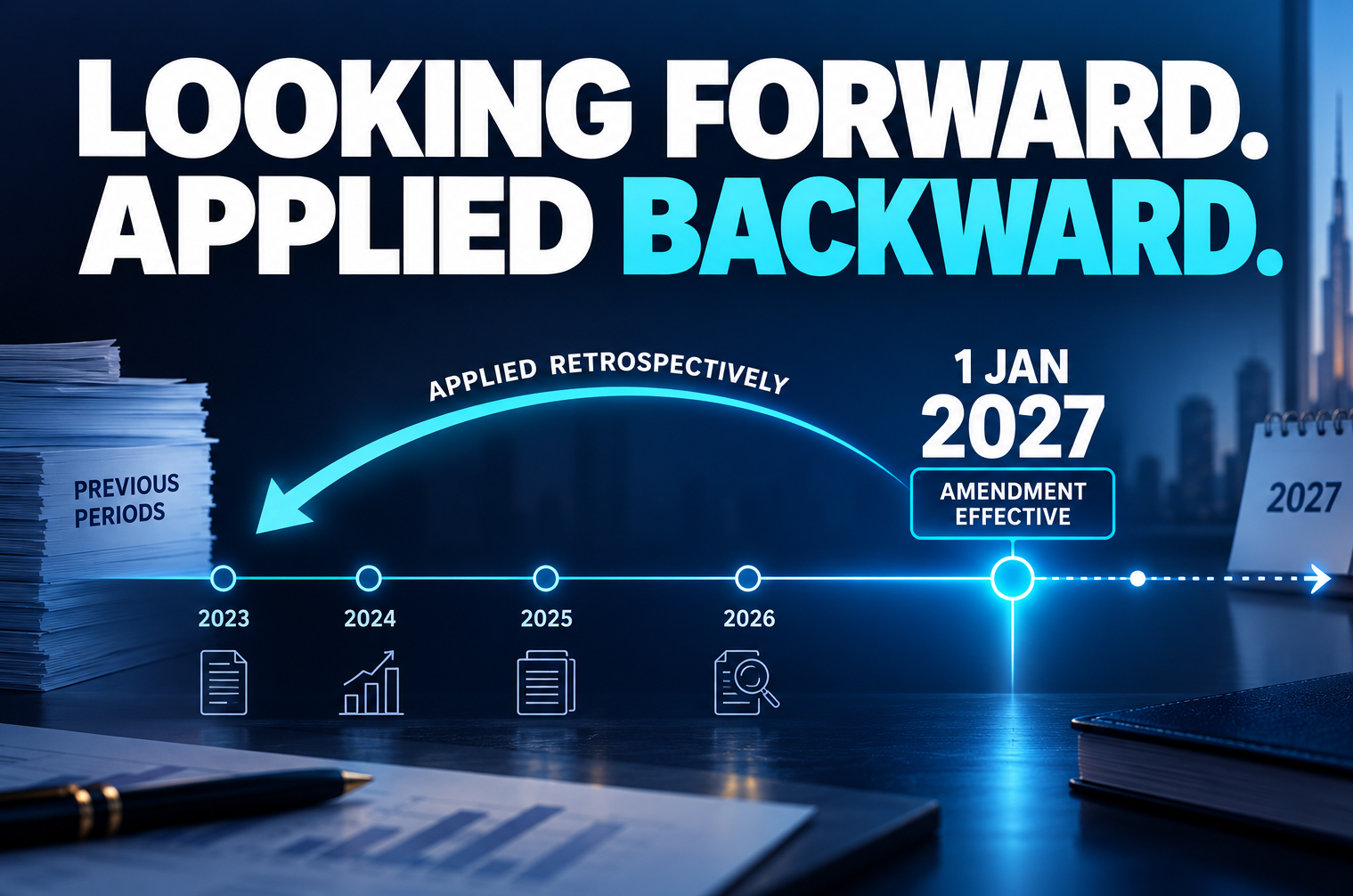
The amendment to IAS 21 is effective for annual reporting periods that begin on or after 1 January 2027. It must be applied retrospectively.
- Phone
- +971 56 524 0583
- [email protected]
- Office
- Office 217, Business Village, Block B, Al Maktoum, Deira, Dubai
- Hours
- Monday to Saturday, 9:00 to 18:00